Cost Guide
Exterior Renovation & Paving Cost Guide
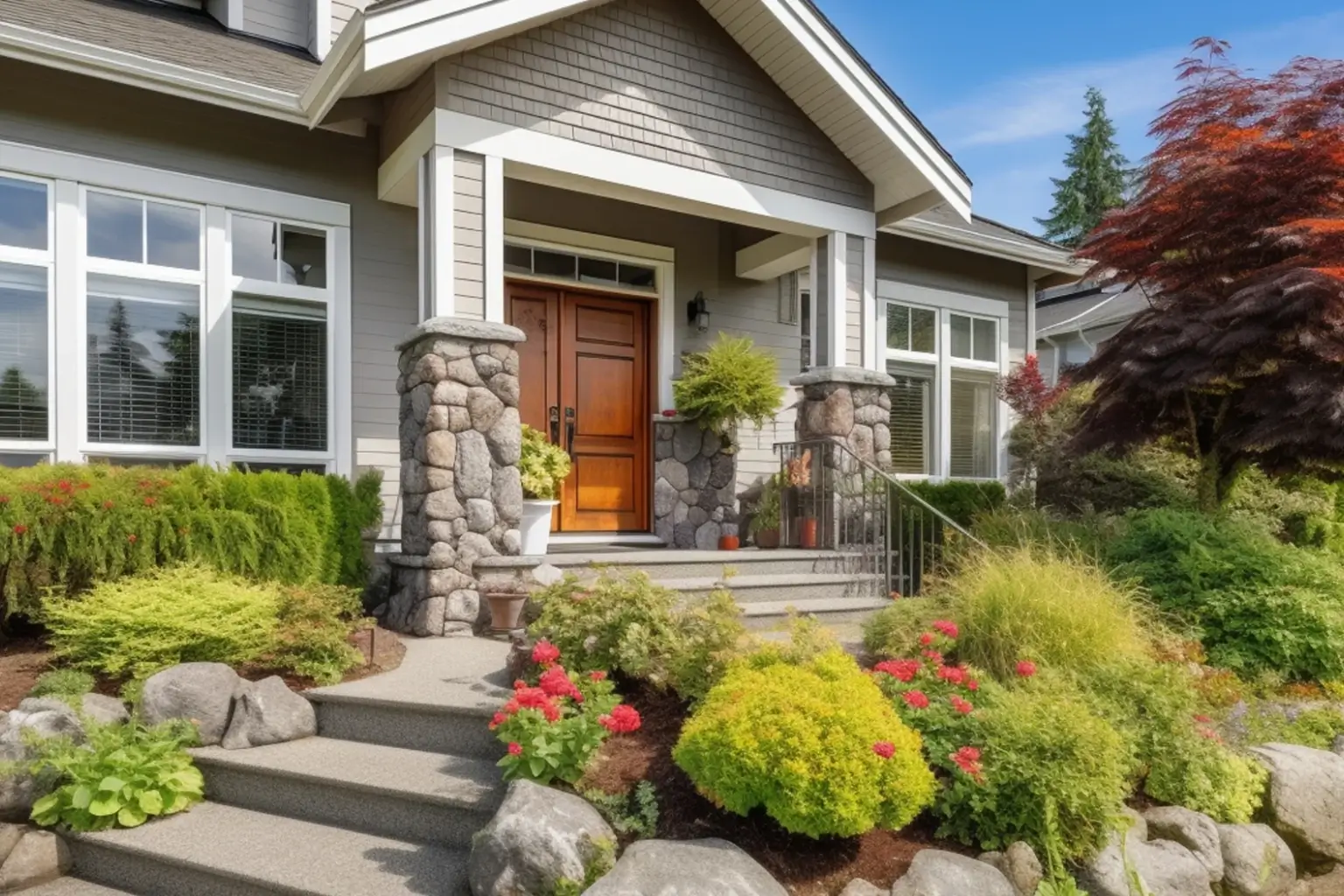
The exterior of your home is the first thing people see, and it's often one of the more affordable ways to make a big visual impact. Here's what the major exterior projects typically cost.
Driveway & walkway paving: $8,000–$20,000
Standard concrete or asphalt sits at the lower end; pavers and stamped concrete cost more but hold up better and add more curb appeal.
Stucco repair & re-texture: $6,000–$15,000
Depends on how much of the exterior needs patching vs. a full re-coat, and whether the texture is being changed.
Exterior paint: $5,000–$12,000
Varies by home size and the number of stories — the fastest, lowest-cost way to change how your home reads from the street.
Full exterior refresh: $30,000–$80,000+
Combines paving, stucco, and paint into one coordinated project — often the most cost-efficient way to tackle all three since crews and equipment overlap.
What to tackle first
If your budget is limited, prioritize repairs that prevent water intrusion — stucco cracks and driveway drainage issues — before cosmetic work like paint. We also coordinate roof replacement and solar installation alongside exterior projects so everything is handled under one contractor.
See a recent roof and solar project in Hollywood as an example of coordinated exterior work.
Materials and options worth knowing about
Each of the projects above comes with its own short list of material choices, and most of them trade up-front cost against how long the work lasts and how much maintenance it asks for in between.
Stucco
- Texture — smooth, sand/float, dash, and Santa Barbara (a heavier hand-troweled finish) cost roughly the same to apply. On a repair, matching the existing texture is what actually drives the choice, and a good plasterer can match most textures closely.
- Color coat vs. paint — a colored finish coat carries pigment through the material, so a chip doesn't reveal a different color underneath and it never peels. Paint over stucco costs less and gives a far wider color range, but it starts a maintenance cycle.
- Repair vs. re-coat — patching cracks is the cheaper path, and patches on an older wall rarely disappear entirely. A full re-coat over the whole elevation is what makes a repaired wall read as one surface again.
- Cracks that matter — hairline cracking in stucco is normal. Stair-step cracking at corners, cracks that keep widening, and staining below a crack all point to water getting in behind the wall, which is a different and more urgent job than a cosmetic patch.
Siding
- Fiber cement — holds up better than wood in Southern California's sun, doesn't rot, and takes paint well. Now common even on homes originally sided in wood.
- Wood — the most authentic on a period house and the most maintenance. Cedar and redwood resist rot better than pine.
- Engineered wood — the middle option: lighter and cheaper to install than fiber cement, more stable than solid wood.
- Profile and reveal — on a partial re-side, matching the board width and the amount left exposed matters more than matching the material, because that's what the eye reads from the street.
Paint and prep
- Acrylic — standard 100% acrylic exterior paint is the default, and a good one holds its color well in sun.
- Elastomeric — a much thicker, flexible coating that bridges hairline stucco cracks and adds a weatherproofing layer. It costs more, and it needs a sound substrate underneath. It is not a way to cover a wall that has a water problem.
- Prep is most of the job — washing, scraping, caulking and priming is where an exterior paint job's life is decided. A five-year paint job and a twelve-year paint job can use exactly the same paint.
- Sheen and color — flat hides surface imperfections on stucco; satin and semi-gloss go on trim and doors and clean more easily. Darker colors fade faster in full sun, particularly on south and west elevations.
Roofing
- Asphalt composition shingle — the most common and least expensive. Architectural (dimensional) shingles cost more than three-tab and last considerably longer.
- Concrete and clay tile — very long-lived, and heavy enough that the roof framing has to be able to carry them. Common on Spanish and Mediterranean homes across the region.
- Metal — standing-seam metal costs more up front, lasts longest, and reflects heat well.
- Flat roofs — modified bitumen, TPO and similar single-ply membranes. Drainage detailing matters more than which membrane brand is used.
- Underlayment and flashing — what actually keeps water out at valleys, walls and penetrations. Reusing old flashing under a new roof is a common corner to cut, and a common source of leaks afterwards.
Paving and drainage
- Asphalt — the least expensive driveway surface, and it needs periodic sealcoating.
- Concrete — lasts longer, and control joints are placed to decide where it cracks rather than whether.
- Pavers and stamped concrete — the most expensive. Pavers have one practical advantage that's often worth the money on a driveway: a settled or stained section can be lifted and reset without a visible patch.
- Base and thickness — a driveway carrying vehicles needs more compacted base and more thickness than a walkway. It's invisible once finished, and it's the most common difference between two bids that look the same on paper.
- Drainage — a driveway or walkway is also a drainage decision. It should shed water away from the house and the garage, and permeable paving is an option where runoff is a concern.
- Gutters and downspouts — where roof water is discharged matters as much as whether gutters exist at all. Downspouts that dump against a foundation undo a lot of other good work.
Fencing, gates and lighting
- Fencing — wood is least expensive and needs the most upkeep; vinyl needs almost none and has a narrower range of looks; wrought iron costs the most and lasts the longest; horizontal slat fencing reads modern and costs more in labor than in material.
- Gates — a driveway gate is an electrical and structural item as much as a decorative one: posts, an operator, a safety loop and a power run.
- Exterior lighting — path lighting, wall-mounted fixtures at entries, and uplighting on trees or the facade. Fixtures need to be rated for wet locations, and warm color temperatures are more flattering on a facade than cool ones.
See more finished exteriors in the project gallery, or read our backyard remodel cost guide if you're tackling curb appeal and the yard together.