Timeline Guide
How Long Does a Kitchen Remodel Take in Los Angeles?
By Yigal Biton, Founder · October 16, 2026
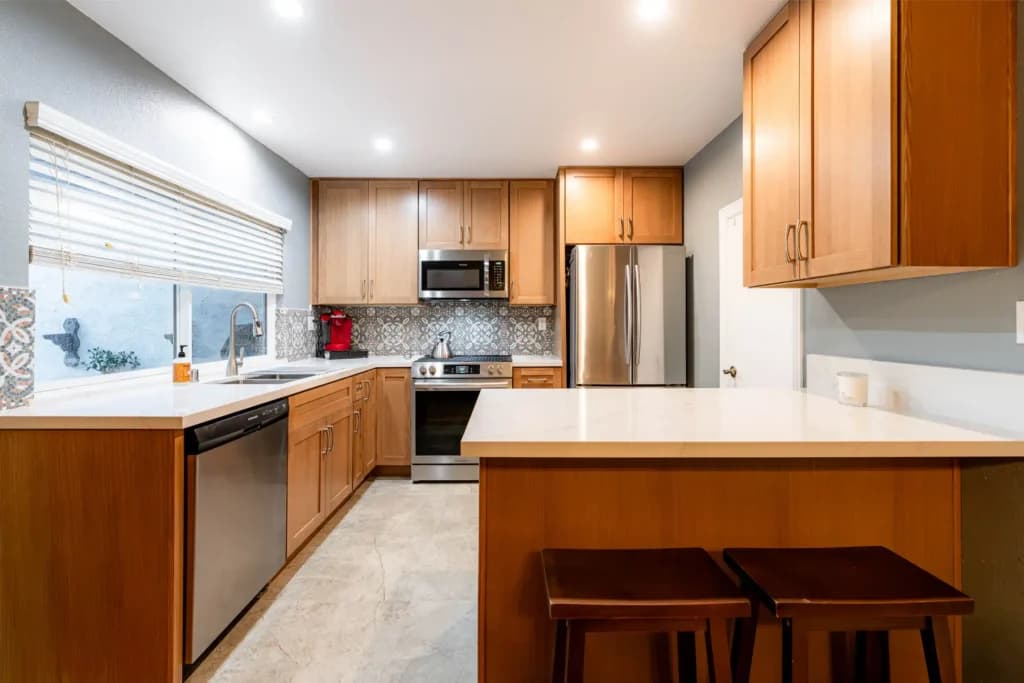
The honest answer to "how long does a kitchen remodel take?" has two parts: the time the crew is actually in your home, and the time before that — design, ordering and permits — which is often longer than homeowners expect. On the kitchens we build, work on site typically takes four to eight weeks. From the first design meeting to a finished kitchen, published Los Angeles estimates run from roughly two to four months for a mid-range remodel with permits, to four to six months or more for a full gut with layout or structural changes.
A note on the numbers below: every timeline in this guide is a general range for Los Angeles, not a schedule for your project. Real schedules depend on the scope of the work, how long your cabinets take to arrive, how long your city takes to review plans, what is found behind the walls, and how quickly decisions get made. Use these ranges to plan, then ask any contractor for a written schedule.
Kitchen remodel timeline at a glance
- Design and planning: about 2 to 6 weeks.
- Selections and ordering: a few days to a few months, driven almost entirely by the cabinets.
- Permits and plan check: a few weeks for a simple project to several months for a complex one.
- Demolition: typically 2 to 5 days.
- Plumbing, electrical and gas rough-in: about 2 to 3 weeks.
- Cabinets, counters, backsplash, finishes and final inspection: the rest of the on-site schedule, which for most kitchens we build adds up to four to eight weeks in total.
Phase by phase
1. Design and planning
This is the phase homeowners most often underestimate. Settling the layout, cabinet style, appliances, lighting and finishes typically takes about two to six weeks, and it stretches when several people have to agree. Every decision made here is one you will not be making mid-construction, when changing it costs more and delays the work.
2. Selections and ordering
Cabinets are the biggest variable in the whole schedule. Published lead times range from about a week for stock cabinets to as much as sixteen weeks for fully custom ones, and custom cabinetry is commonly quoted at eight to twelve weeks to build. Because of that, the best schedules order cabinets and appliances as soon as the design is final and let them be built while the permit is being reviewed, rather than waiting for approval first.
3. Permits and plan check
Whether you need a permit depends on the scope. Work that stays inside the existing layout — replacing cabinets in the same place, new countertops, refacing and finishes — generally does not need a building permit in Los Angeles, while new outlets and circuits, a new range hood, and plumbing or gas changes usually do, and moving or removing a wall brings structural review as well. In the City of Los Angeles that review goes through LADBS. Published estimates put the time at a few weeks for a simple project to several months for a complex one with structural changes, so confirm the requirements for your address with the city.
4. Demolition
Taking out the old kitchen is fast — typically two to five days — and it is the point where your kitchen stops being usable, so it is worth having cabinets and appliances on order before it starts.
5. Rough-in and inspections
Once the room is open, the plumbing, electrical and gas work and any framing changes go in, typically over about two to three weeks. This is also where inspections happen, before the walls are closed up. If you are opening a wall in an older home, this is the stage where hidden problems — outdated wiring or plumbing, or water damage — show up.
6. Cabinets, counters and finishes
After the walls are closed and finished, cabinets are installed first. Countertops are then measured to the installed cabinets and fabricated, which creates a pause while the stone is cut, followed by the backsplash, plumbing and electrical fixtures, appliances, flooring and paint.
7. Final inspection and punch list
The last steps are the final inspection and a walkthrough where you and your contractor list anything that still needs adjusting.
What slows a kitchen remodel down
- Custom or backordered cabinets and appliances — the single most common cause of a long schedule.
- Plan-check comments — the city asks for corrections and the plans go back for another review.
- Structural changes — removing or moving a wall needs engineering and permit review before the work can start.
- Surprises behind the walls — outdated wiring or plumbing, or water damage, has to be corrected before new work goes in.
- Changes after work begins — swapping a material or layout mid-project can mean reordering, re-inspection and a longer schedule.
How to keep your kitchen remodel on schedule
- Finish the design and choose your materials before demolition starts.
- Order cabinets and long-lead appliances as soon as the design is final, in parallel with the permit.
- Ask for a written schedule that accounts for plan-check time, not just construction time.
- Decide how you will cook while the kitchen is out of service — many homeowners set up a temporary kitchen with a microwave, a hot plate and a table away from the construction area, and plan for dust, noise and the occasional day without water or power.
What it costs, and what a finished kitchen looks like
Time and budget move together. Our guide to what a kitchen remodel costs in Los Angeles breaks down the price tiers, and our guide to financing a remodel covers how homeowners pay for one. For a finished example, see a full kitchen remodel in Chatsworth, browse the project gallery, or read how long a bathroom remodel takes if you are planning both rooms.
Every estimate we provide is itemized, and we handle the permitting on our projects, so the schedule you are given accounts for it. See our kitchen remodeling service, or request a free, itemized kitchen estimate and a realistic schedule for your home.