Agoura Hills sits on the 101 between Calabasas and Westlake Village and is a city in its own right: residents voted it into existence in 1982 as the 83rd city in Los Angeles County, and the 2020 Census counted 20,299 people in about eight square miles. That means permits here do not go through LADBS or the county. The Building & Safety Division, part of the Planning and Community Development Department at 30001 Ladyface Court, runs plan check, permits and inspections — (818) 597-7334 or Permits@AgouraHillsCity.org — and we submit to it directly.
Elsewhere, fire-zone status usually turns on the parcel. In Agoura Hills it does not: Ordinance No. 16-425 adopts Chapter 7A of the building code and designates the entire city a Very High Fire Hazard Severity Zone for building-code purposes. The city's own handout says the standards reach new buildings and also additions, alterations and repairs, so an addition, an exterior alteration or a re-roof is in scope, not just a ground-up house. The ordinance requires a Class A roof assembly and prohibits wood-shingle and wood-shake roofs outright. We draw ignition-resistant exterior walls, eave and vent details, decking and glazing into the plans at concept stage, because swapping materials after plan check is slow.
The risk is not abstract. The Woolsey Fire ignited on November 8, 2018 and, by CAL FIRE's final count, burned about 96,949 acres and destroyed 1,643 structures across Los Angeles and Ventura counties; Agoura Hills was among the communities evacuated, and the city later adopted an ordinance to speed reconstruction of homes the fire damaged. Homeowners here tend to ask about hardening, not just finishes, so we raise it early — vent screening, tempered glazing, non-combustible decking and clearance around the structure — and itemize it in the first estimate.
Oaks are the other local rule that decides a plan. Under Section 9657 of the city's zoning code, no one may cut, prune, remove, relocate, endanger or damage a protected oak without a permit, and the protection extends to the tree's protected zone, not just the trunk — so a pool, patio or addition that never touches the tree can still need one. The Planning Director can approve removing a single oak on a single parcel, larger requests go to the Planning Commission, and damaging or removing an oak without approval can mean replanting or donating two or more oaks of reasonably equivalent size and value. The city has also moved to extend protection to California sycamore and Southern California black walnut, so we confirm the current protected list with the Planning Division before we fix a footprint.
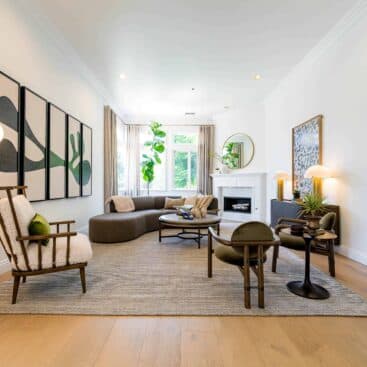
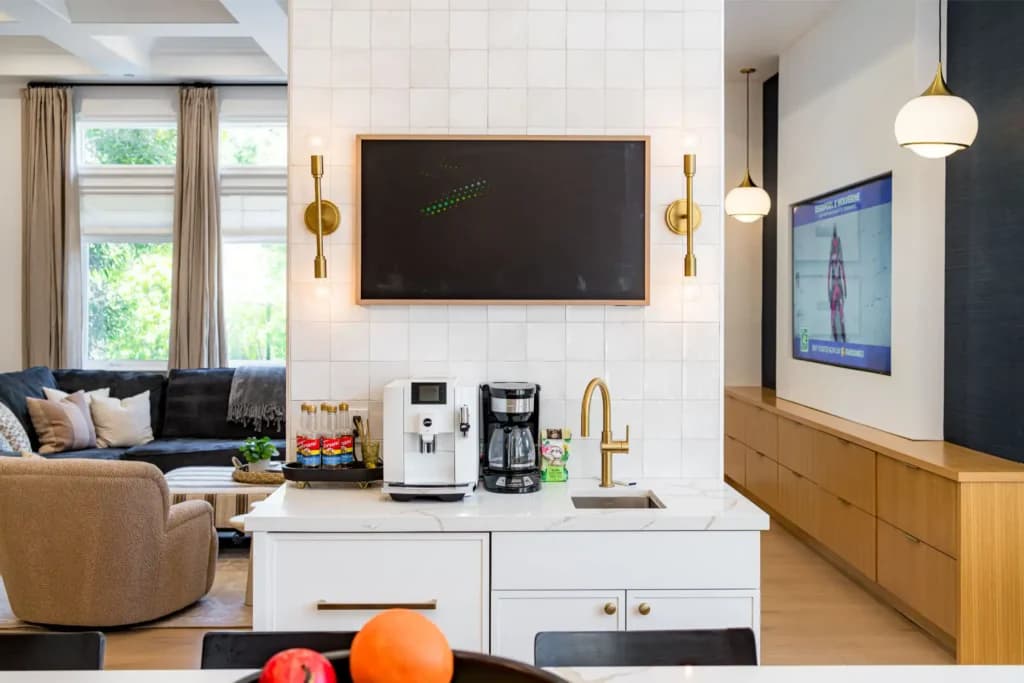
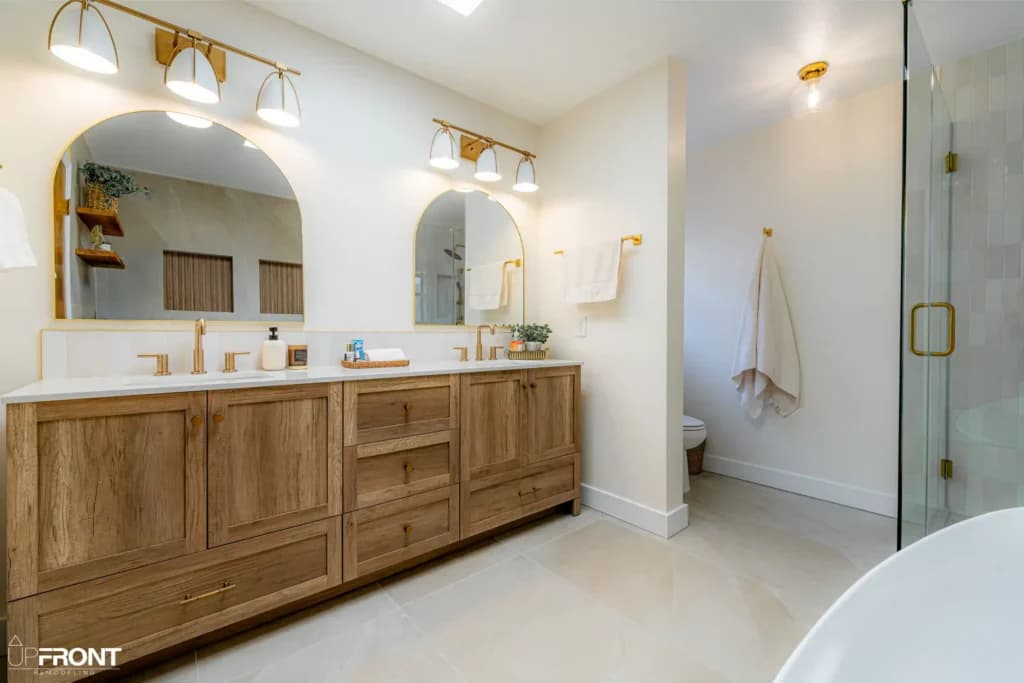
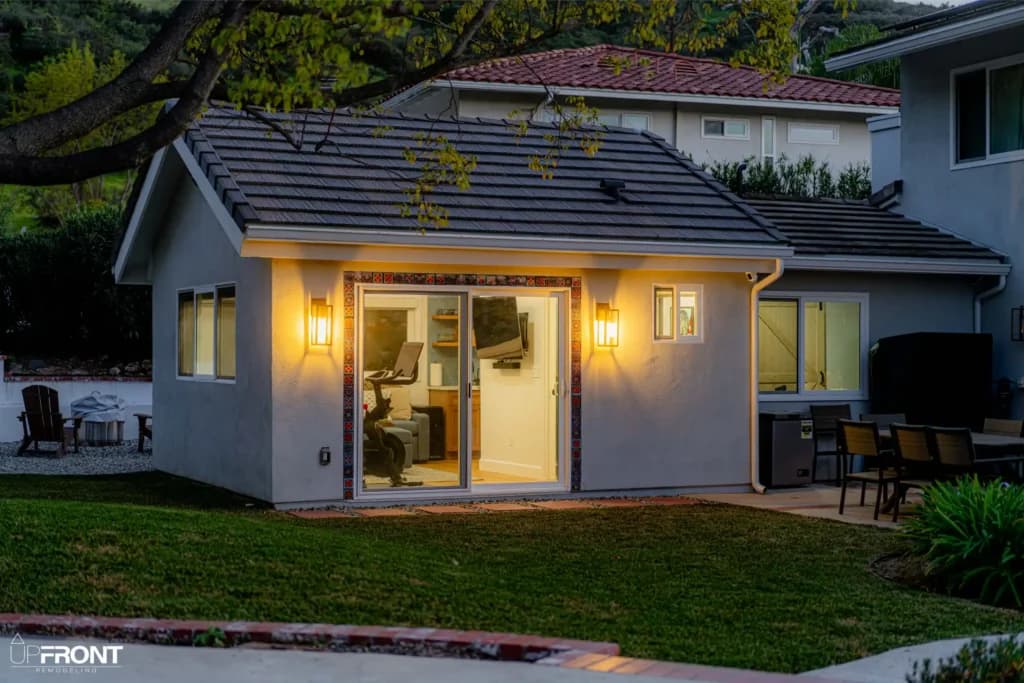
Growth came after U.S. 101 was built through the area in the late 1960s. Hillrise, Liberty Canyon and Lake Lindero were the first tracts, schools and the downtown followed in the 1970s, and big parcels were subdivided into tracts through the 1980s — so most Agoura Hills housing is now roughly 35 to 55 years old, the age when roofs, windows, ducts and electrical panels often come due together. North of the freeway, Old Agoura plays by different rules: a design overlay exists to keep its rural, equestrian character, projects there generally go through the city's architectural design review, and where a lot sits in the Residential Very Low zone the minimum lot is an acre and buildings top out at two stories or 35 feet. The Westlake Village complete-home renovation, master bathroom and room addition filmed below are a few miles west on the same corridor and show the sequence we would run on an Agoura Hills lot.
Frequently asked questions about remodeling in Agoura Hills
- Do I need a permit to trim or remove an oak tree in Agoura Hills?
- Very likely, yes. Agoura Hills protects oaks under Section 9657 of its zoning code, and the rules cover cutting, pruning, removing, relocating or damaging a protected tree, including work inside its protected zone. The application needs a written justification and a site plan showing the trees. A single-oak removal on one parcel is decided by the Planning Director, bigger requests go to the Planning Commission, and damaging a protected oak can mean replanting or donating two or more oaks of similar size and value. Because the city has been updating its protected-tree rules, call the Planning Division at (818) 597-7339 — or let us — to confirm what applies to your trees before any saw comes out.
- Is my Agoura Hills house in a high fire hazard zone?
- For building-code purposes, yes — the whole city is. Ordinance No. 16-425 designates all of Agoura Hills a Very High Fire Hazard Severity Zone and adopts Chapter 7A, so the ignition-resistant requirements apply to additions, alterations and repairs as well as new homes, whichever street you are on. Roofs must be Class A assemblies, and wood-shingle and wood-shake roofs are prohibited. It does not stop you from remodeling or building an ADU; it changes the materials list, and we put that list into the drawings from the start.
- Can I build an ADU in Agoura Hills?
- Generally yes — state ADU law (Gov. Code sections 66310–66342) governs, and the city's own standards have to fit within it. The city adopted its current ADU ordinance in 2021, the state housing department has reviewed it, and the Planning Commission voted in October 2025 to recommend replacing it with a rewrite that tracks recent state changes, so size, setback and parking details depend on which version is in force when you apply. The Building & Safety Division also publishes a pre-approved ADU plan checklist and an ADU FAQ. We confirm the current standards before design starts and build the fire-zone materials into the unit from the beginning.